
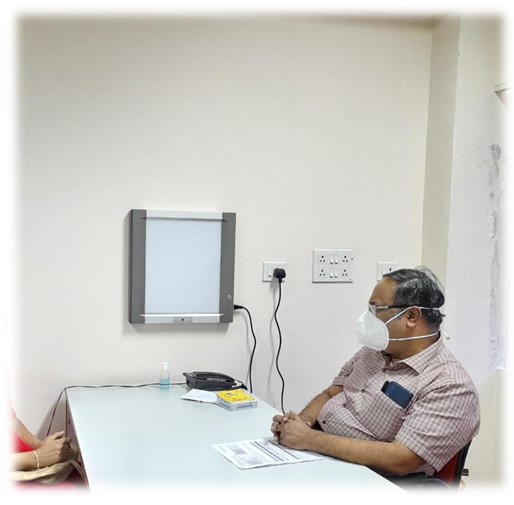
The Genetic and Metabolic Unit of the Child Development Centre (CDC), an autonomous institution located within the SAT Hospital campus, Thiruvananthapuram, has evolved into a state-of-the-art facility offering comprehensive diagnostic services for genetic and metabolic disorders in children. Over the years, the centre has achieved several significant milestones in the establishment and expansion of genetic clinical services, cytogenetics, and molecular diagnostics. The major milestones are outlined below.
Objectives
Offering karyotyping in children suspected with chromosomal disorders.
Offering Karyotyping for couples having recurrent pregnancy loss / infertility
Providing Genetic counselling for patients
Services Offered
The Genetic and Metabolic unit offers advanced laboratory diagnostic facilities to identify and screen the developmental issues in children. The various diagnostic services include bio-chemical analysis, cytogenetic analysis and molecular biology techniques. The detailed infrastructure and procedures available at the unit is summarised below.
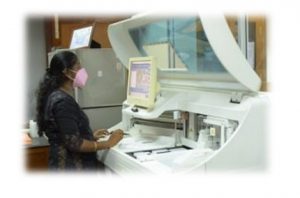
Bio-chemistry Section
The Bio-chemistry section of the laboratory is equipped with diagnostic devices like Automated Chemiluminescence Immunoassay Analyser for doing thyroid function test in children and adolescents.
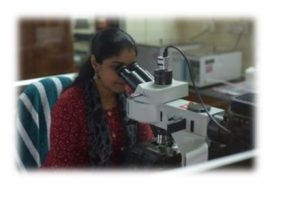
Molecular Genetics
This section of the laboratory is involved in research activities which include an on-going multicentric collaborative study on lysosomal storage disorder. The lab is also dealing with mutation analysis of rare diseases. Blood samples are collected from SAT as well as from other collaborative centres. DNA isolation followed by PCR, visualization by Gel Documentation system and finally sequencing are being done.
Human Cytogenetics
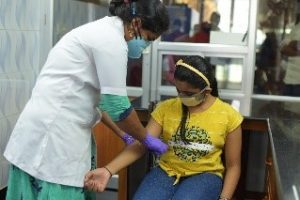 The Human Cytogentic Laboratory is involved in genetic diagnostic services to the patients attending Medical College and SAT Hospital, Thiruvananthapuram. Cytogenetic study is carried out in children with suspected chromosomal disorders (Intellectual Disability/ Dysmorphism/ Multiple malformation/ Down syndrome/ Short stature/ Ambiguous genetalia) and in couples with recurrent pregnancy loss, infertility etc. The lab follows stringent sterile conditions for sample collection and culture procedures. The documentation and reporting of chromosomal analysis follows the International standard for Chromosomal Nomenclature (ISCN- 2013). The laboratory is equipped with computerised karyotyping system (Applied Spectral Imaging Software) allowing a substantial shortening of turnaround time of the results. The results will be verified by a qualified Medical Geneticist and genetic counselling will be provided to the needy patients.
2007 – Establishment of the Genetic Clinic
The Genetic Clinic was established in the year 2007 in the SAT hospital to provide specialized genetic evaluation, diagnosis, and counselling for children with developmental delays, congenital anomalies, neurodevelopmental disorders, and inherited metabolic conditions. This marked the beginning of organized genetic services at CDC, catering to a growing pediatric population with suspected genetic disorders.
2013 – Establishment of the Cytogenetics Laboratory (Karyotyping Facility)
In 2013, the Cytogenetics Laboratory was initiated with karyotyping as the primary diagnostic service. This was a major leap forward in in-house genetic diagnostics, enabling the detection of numerical and structural chromosomal abnormalities such as Down syndrome, Turner syndrome, and other chromosomal disorders. This facility significantly reduced the dependency on external laboratories and improved turnaround time for critical diagnoses.
2015 – ICMR Multicentric Research Project
In 2015, the Genetic and Metabolic Unit achieved national recognition by participating in an Indian Council of Medical Research (ICMR) funded multicentric project focusing on rare genetic disorders such as Gaucher disease, Achondroplasia, and Apert syndrome. This project strengthened the research component of the laboratory and enhanced expertise in the diagnosis and management of skeletal dysplasias and lysosomal storage disorders.
2017 – Establishment of the Molecular Genetics Laboratory
In 2017, the Molecular Genetics Laboratory was established, expanding the diagnostic scope of the centre beyond cytogenetics. Molecular diagnostic techniques were introduced for the detection of single-gene disorders. This marked a significant technological advancement, enabling precise mutation-based diagnosis and facilitating carrier detection and prenatal diagnosis in selected conditions.
2019 – Installation of Genetic Sequencer Facility
In 2019, the laboratory further strengthened its molecular diagnostic capabilities with the installation of a Genetic Sequencer 3500. This facility enabled DNA sequencing for mutation analysis, significantly improving the accuracy and depth of genetic testing. It laid the foundation for advanced diagnostics and research activities and prepared the laboratory for next-generation technologies.
2021 – Introduction of SMA Diagnosis by MLPA
In 2021, Spinal Muscular Atrophy (SMA) diagnosis using MLPA (Multiplex Ligation-dependent Probe Amplification) was introduced. This was a major milestone as SMA is a critical childhood neuromuscular disorder requiring early diagnosis for effective management. The availability of MLPA testing at CDC greatly benefited patients from across the state by providing rapid, reliable, and cost-effective diagnosis.
2023 – NABL Accreditation for Cytogenetics and Biochemistry
In 2023, the Cytogenetics and Biochemistry sections of the laboratory achieved NABL accreditation as per ISO 15189 standards. This accreditation established the laboratory’s compliance with international quality standards for medical laboratories and reinforced its commitment to accuracy, reliability, and patient safety in genetic testing.
2023 – Designation as Centre of Excellence (CoE) for Rare Diseases
In the same year, the Centre received recognition as a Centre of Excellence (CoE) for Rare Diseases for SAT Hospital. The Genetic Laboratory at the Child Development Centre serves as the core laboratory facility for this CoE. This milestone strengthened the role of CDC as a referral hub for rare disease diagnosis and management in the state.
Expansion of Diagnostic Test Portfolio
In addition to routine karyotyping, FISH, and molecular diagnostics, the laboratory has continuously expanded its diagnostic portfolio to include advanced and specialized tests. These include:
- Hemophilia diagnosis (Inversion 22 mutation detection)
- FISH testing for DiGeorge syndrome (22q11.2 deletion)
- FISH for sex chromosome analysis (XX/XY)
- SRY gene deletion analysis
- Other targeted molecular tests for inherited disorders
The laboratory currently offers cytogenetics and molecular diagnostic services in-house, with advanced technologies such as microarray and next-generation sequencing (NGS) being performed through collaborative arrangements with other reputed centers.
Conclusion
From its modest beginning as a genetic clinic in 2007 to becoming a NABL-accredited laboratory and Centre of Excellence for Rare Diseases in 2023, the Genetic and Metabolic Unit of the Child Development Centre has made remarkable progress. The continuous upgrading of infrastructure, technologies, and test menu reflects its strong commitment to excellence in patient care, diagnostics, teaching, and research in medical genetics.